Understanding the Telehandler
What is a Telehandler?
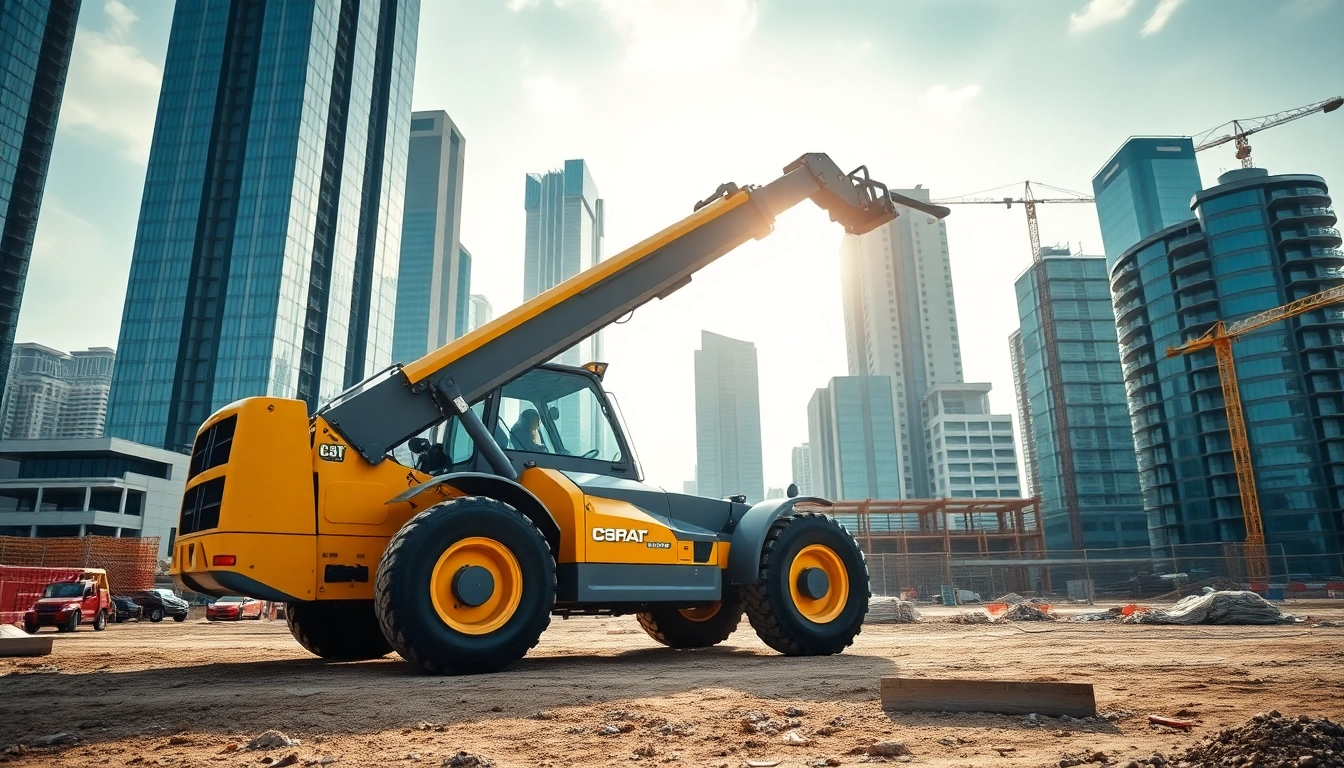
A telehandler, or telescopic handler, is a versatile piece of machinery that combines the features of a forklift and a crane, primarily used in construction, agriculture, and various industrial applications. Its ability to extend its boom gives it the unique capability to lift loads to heights that standard forklifts cannot reach. This enables efficient loading, unloading, and moving of materials across job sites. Equipped with various attachments, a telehandler can easily tackle different types of tasks, making it an invaluable asset on many projects.
Key Features of Telehandlers
Telehandlers come equipped with several key features that enhance their utility and efficiency:
- Versatile Boom: The extendable boom allows for a wide range of lifting heights and outreach capabilities.
- Interchangeable Attachments: Operators can replace forks, buckets, or grapples with ease, enhancing functionality.
- Four-Wheel Drive: Many telehandlers offer the capability to drive all four wheels, allowing for improved maneuverability.
- Cabin Visibility: Designed with large windows for optimal visibility, ensuring safe operation on busy job sites.
- Stabilizers: Providing added stability, especially when handling heavy loads at height.
Types of Telehandlers Available
There are several types of telehandlers available in the market, categorized primarily by their design and the applications they serve:
- Standard Telehandlers: General-purpose machines suitable for lifting and moving materials.
- Heavy-Duty Telehandlers: Designed to handle larger loads and extended reach, ideal for construction sites.
- Compact Telehandlers: Smaller machines that work well in tight spaces, especially in urban construction projects.
- Rough Terrain Telehandlers: Equipped with large tires and robust build to navigate uneven ground.
Benefits of Using Telehandlers
Increased Versatility on Job Sites
The telehandler’s design offers unmatched versatility on job sites. With the ability to quickly switch between attachments, operators can use it for various tasks, from lifting heavy pallets to loading materials onto trucks. This adaptability reduces the need for multiple pieces of equipment, saving time and costs for project managers.
Enhanced Safety and Stability
Safety is paramount on job sites, and telehandlers deliver on this front. Many models come equipped with advanced safety features such as load stability indicators and anti-tip systems. This ensures that operators can move loads safely, even in challenging conditions. Additionally, the visibility from the cabin allows operators to see their surroundings clearly, reducing blind spots and improving overall safety.
Cost-Effectiveness for Heavy Lifts
Utilizing a telehandler can be more cost-effective than traditional lifting solutions, especially for heavy lifts. Its ability to reach higher elevations without the need for additional rigging equipment minimizes labor costs and enhances operational efficiency. Additionally, by investing in a telehandler, companies can reduce the wear and tear on smaller lifting equipment.
Operational Best Practices for Telehandlers
Pre-Operational Checks and Maintenance
Routine inspection and maintenance of a telehandler are critical to ensuring safe and efficient operations. Operators should conduct daily checks that include:
- Inspecting the boom for any signs of damage.
- Checking fluid levels and leaks in hydraulic systems.
- Ensuring tire pressure is adequate and treads are in good condition.
- Testing all controls and alarms before operating.
Establishing a regular maintenance schedule will contribute to the durability and reliability of the telehandler.
Safe Manoeuvring Techniques
Safe operation of a telehandler requires that operators are well-trained in specific maneuvering techniques, including:
- Always maintaining a low center of gravity by keeping the load close to the ground.
- Using stabilizers when lifting heavy loads to prevent tipping.
- Executing turns slowly and cautiously, especially on uneven terrain.
- Keeping the forks or attachment pointed in the direction of travel.
These practices help in maintaining a safe working environment and minimize the risk of accidents.
Load Management Guidelines
Proper load management is crucial in ensuring both safety and operational efficiency. Operators should follow these guidelines:
- Always verify the load capacity specified for the telehandler.
- Use charts and indicators to determine proper load distribution.
- Secure loads adequately before moving to avoid shifting or falling.
- Never exceed the rated lifting height, especially when carrying heavy loads.
Following these guidelines not only enhances safety, but it also helps in prolonging the life of the telehandler.
Common Challenges and Solutions
Overcoming Load Limitations
One common challenge faced by telehandler operators is the load limitation based on capacity and reach. To address this, operators should:
- Refer to the manufacturer’s specifications for maximum load limits.
- Use counterweights or other forms of stabilization if needed.
- Plan lifts meticulously, considering the terrain and positioning of the telehandler.
Being aware and adhering to load limitations can significantly reduce the risk of accidents.
Tackling Uneven Terrain
Operating a telehandler on uneven terrain can pose difficulties. Here are strategies to navigate this challenge:
- Choose a telehandler specifically designed for rough terrain.
- Communicate clearly with ground personnel to assess the path before moving.
- Use a slow and steady approach when traversing uneven surfaces to maintain balance.
Implementing these practices can lead to safer maneuvering, reducing accidents related to tipping or loss of control.
Responding to Weather Conditions
Weather conditions can significantly impact the operation of telehandlers. Operators should prepare for various weather-related challenges by:
- Monitoring weather forecasts to anticipate adverse conditions.
- Adjusting operations during high winds or heavy rains, which can affect stability.
- Ensuring that all operators are trained to handle the telehandler under different weather scenarios.
Proactive measures can help in ensuring that the telehandler is operated safely and effectively in all conditions.
FAQs about Telehandlers
What is the average lifting capacity of a telehandler?
The average lifting capacity of a telehandler varies, typically ranging from 4,000 to 12,000 pounds, depending on the model.
How does a telehandler differ from a forklift?
Unlike a forklift, a telehandler has an extendable boom, allowing it to reach higher and further, making it more versatile for various tasks.
What maintenance is required for telehandlers?
Regular maintenance includes daily checks of fluids, hydraulic systems, and tires, alongside scheduled servicing for components like the boom and engine.
How do I choose the right telehandler for my project?
Consider factors like lifting height, load capacity, terrain type, and specialized attachments needed for the tasks at hand when choosing a telehandler.
Are telehandlers suitable for outdoor use?
Yes, telehandlers are designed for outdoor use, particularly in construction and agricultural environments, and many models are equipped for rough terrain.